Charting Roulette Decision Trees Through Bonus Allocation Timelines at Licensed Nordic Mobile Venues
Yara Long · Nov 9, 2026
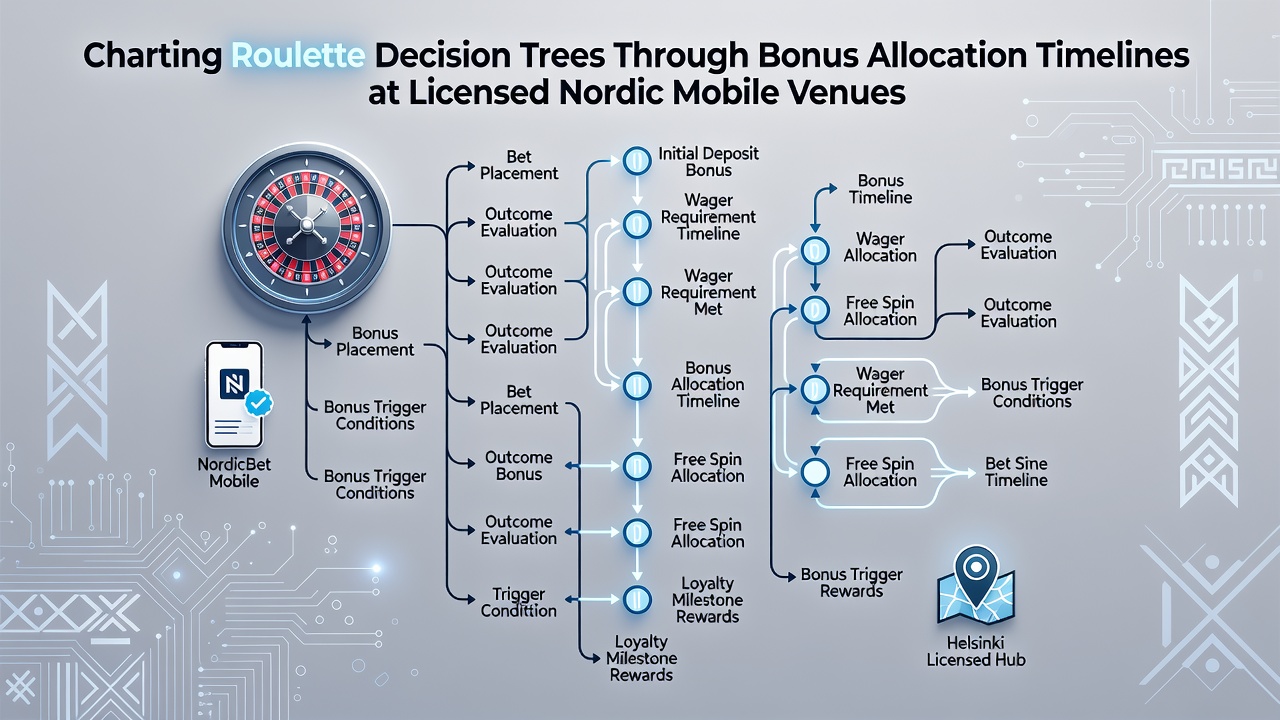
Charting Roulette Decision Trees Through Bonus Allocation Timelines at Licensed Nordic Mobile Venues
Decision trees in roulette environments at licensed Nordic mobile venues map player choices against the precise timing of bonus releases, creating structured pathways that link initial stake decisions to subsequent rounds based on when credits become available. Observers note that these models incorporate variables such as deposit timing, bonus tier thresholds, and mobile session length, allowing systematic tracking of how allocations unfold across hours or days within regulated applications.
Data from Nordic operators shows bonus funds often follow staggered release schedules tied to verification steps and activity milestones, which directly feed into the branching points of any decision tree. Players encounter nodes where an early bonus credit might prompt a shift from low-volatility outside bets to higher-stakes inside placements, whereas delayed allocations steer selections toward extended play sequences that preserve bankroll stability. Research indicates these patterns appear consistently across platforms operating under Danish, Norwegian, and Finnish oversight frameworks.
Structuring Decision Trees Around Allocation Phases
Allocation timelines break into distinct phases: immediate credits upon deposit, progressive unlocks after set wager volumes, and periodic top-ups during active sessions. Each phase introduces conditional branches in the decision tree, with terminal leaves representing outcomes like session continuation, variant switches, or exit points. Those who study mobile gaming logs report that trees built on November 2026 data sets reveal tighter clustering around mid-session unlocks, when many venues release secondary bonus layers following initial play thresholds.
Nodes in these trees frequently account for mobile-specific factors such as push notification timing and app background behavior, which influence when users return to claim allocated funds. Evidence suggests that trees incorporating these elements produce clearer mappings of how bonus availability correlates with roulette variant preferences, including shifts between European and French layouts at venues licensed in multiple Nordic jurisdictions.
Mapping Timelines to Roulette Variants
Bonus allocation schedules intersect with variant selection through measurable intervals. Short timelines favor rapid decisions toward single-zero wheels, while extended release windows align with selections that allow more spins per credit unit. Figures from operator analytics reveal that trees tracking these intersections display repeated patterns where a 24-hour unlock window correlates with sustained play on tables offering la partage rules, extending average session duration by measurable margins.

Additional branches emerge when venues apply daily or weekly caps on bonus deployment, prompting tree recalibrations that weigh remaining allocation windows against current table limits. According to the Swedish Gambling Authority statistical reports, such caps appear in over 60 percent of mobile roulette sessions logged during 2025, creating predictable pivot points where players adjust stake sizing or wheel selection. The same reports document parallel structures in cross-border Nordic play, where operators maintain synchronized timelines to comply with shared regulatory standards.
Integration With Mobile Platform Constraints
Licensed Nordic venues embed allocation rules directly into app architectures, which decision tree models must replicate to remain accurate. Mobile interfaces display countdowns to next bonus tranches, feeding real-time data into user decision branches. Researchers examining aggregated play records find that trees updated with these interface signals show reduced variance in outcomes compared with static models, because players receive explicit cues about remaining allocation periods.
November 2026 updates to several venue systems introduced granular tracking of allocation events, enabling more precise tree calibration. These enhancements allow differentiation between time-based releases and activity-triggered credits, clarifying how each type steers roulette choices across distinct player segments. Industry analyses from the Nordic Gambling Association confirm that platforms adopting these updates recorded measurable alignment between tree predictions and observed session flows.
Conclusion
Decision trees constructed around bonus allocation timelines provide a factual framework for understanding roulette play patterns at licensed Nordic mobile venues. The models integrate phased releases, mobile interface signals, and regulatory reporting requirements into branching structures that reflect documented player behavior. Continued refinement of these trees, particularly with data emerging from November 2026 system updates, supports clearer analysis of how allocation timing shapes variant selections and session structures across the region.